High Precision CNC Machining Suppliers from China!
 Tel/WeChat: +86-157-2817-7583
 Email: Quotation@prototype-cnc.com
Tel/WeChat: +86-157-2817-7583
Email: Quotation@prototype-cnc.com
Email: Quotation@prototype-cnc.com
Tel/WeChat: +86-157-2817-7583
Email: Quotation@prototype-cnc.com

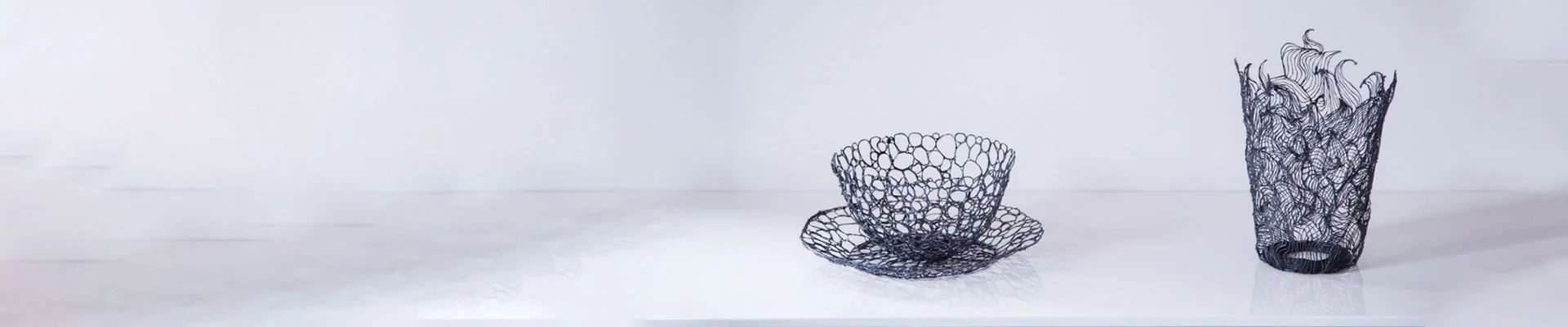
Kyoto Prototype has one of the largest 3D Printing capabilities in the world to fulfil your on-demand manufacturing requirements. From product development to industrial 3D manufacturing, Kyoto Prototype offers a comprehensive range of rapid prototyping services and technologies. Our range of 3D Printing services includes SLM, SLA, SLS, MJF and Urethane Casting.

Fused Deposition Modeling(FDM) is an additive manufacturing process that belongs to the material extrusion family.
In FDM, an object built by selectively depositing melted material in a pre-determined path layer-by-layer.

Stereolithography (SLA) uses a laser to cure various liquid resins into a solid structure.
SLA produces parts with high precision, smooth, and detailed surface finish.

Selective Laser Sintering (SLS) uses a high-power laser to sinter powdered material and build a solid and stable structure.
Parts printed by SLS can work well as functional parts.

Multi Jet Fusion (MJF) uses unique technology and exclusive PA12 material to create strong parts with high dimensional accuracy.
MJF provides high-quality surface finish parts and consistent mechanical properties.

Scanning the metal powder bed with laser light, the powder will be melted and solidified into metal parts.
Parts with complex structures or parts that need to be lightweight designed can be easily manufactured with SLM.
Not sure about which process is the correct one for your part design? Download our 3D Printing Design Guidelines
| SLM | SLA | SLS | MJF | FDM | |
|---|---|---|---|---|---|
| Material Type(s) | Metal Powders | Resin | Nylon and Polypropylene | Nylon | Engineer Plastic |
| Available Materials | 5 | 8 | 4 | 1 | 2 |
| Max. Build Size (mm) | 320 x 320 x 400 | 1650 x 760 x 580 | 350 x 350 x 400 | 370 x 270 x 380 | 1000 x 610 x 610 |
| Min. Wall Thickness (mm) | 1 | 0.6 | 0.8 | 0.8 | 1 |
| Tolerance (±mm) | 0.2 | 0.2 | 0.3 | 0.3 | 0.2 |
| Accuracy | |||||
| Surface Finish | |||||
| Complex Design | |||||
| Support Structures | YES | YES | No | No | YES |
| Pros |
Lightweight design Strong functional parts High density (~99%) Good mechanical properties |
High quality High accuracy Smooth surface finish Functional applications Fast production Complex models Good scalability No wasted materials |
Good chemical resistance Strong functional parts Excellent layer adhesion High strength and stiffness Excellent mechanical properties No support structures require. |
Strong functional parts Accurate printing with fine details Smoother surface compare to SLS Consistent mechanical properties High chemical resistance No support structures require. |
Strong functional parts Accurate printing with fine details Smoother surface compare to SLS Consistent mechanical properties High chemical resistance No support structures require. |
| Cons |
Post-processing is necessary for high quality surface. Spheroidization and warpage might occur. |
The material is sensitive to long exposure to UV light. Parts are affected by moisture, heat, and chemicals. Material is limited to photosensitive resin. |
Rough surface finish Limited material options |
Limited material options | Limited material options |
| Applications |
Metal prototypes Parts require complex structure Lightweight design Topology optimization Small-batch production for metal parts Mold conformal cooling channel |
Functional prototyping Patterns, molds, and tooling Dental applications Jewelry prototyping and casting Modelmaking |
Functional prototyping Short-run, bridge, or custom manufacturing |
Functional prototyping Short-run, bridge, or custom manufacturing |
Functional prototyping Short-run, bridge, or custom manufacturing |

Somos® Tough Resin

Somos® GP Resin

Somos® Tough Resin
PA12 White

Somos® GP Resin

AlSi10Mg
Have you noticed that some natural landforms are the deposition of sand, wind, or water, like sand dunes. Imagine the wind is blowing, and water is flowing; sand becomes a sand dune layer by layer. Is this a process of shaping a three-dimensional object? If so, what if we can print a three-dimensional object layer by layer directly, just by a printer? In the 1980s, printing a 3D model by a printer came true as printing equipment and materials developed.
3D Printing is one of the Rapid Prototyping technologies. It can print three-dimensional objects based on CAD models or digital 3D models under the control of a 3D printer. It is the process of printing an object by adding materials layer by layer, which is called Additive Manufacturing. Assume that 3D Printing is similar to printing files from a printer but using different technologies. For printing a piece of paper, you need a Word, PDF, or Excel document, which are all 2D. While printing an object, you will need 3D model designs in STL file format and 3D printable materials. When 3D models, STL files (need to convert into G-code through a slicer software), and 3D Printing materials are ready, 3D printer is being able to print the design layer by layer.
Distinguished from traditional manufacturing process, 3D Printing is a process of adding materials to create a product instead of machining on a block of material. The additive nature makes 3D Printing a unique manufacturing method, which is typically fast with relative low setup costs. 3D Printing can create more complex geometries than traditional manufacturing techniques, which has been utilizing in the engineering industry widely, particularly for prototyping and creating complex/ lightweight geometries.
3D Printing is connecting with engineers, designers, hobbyists, and, amateurs, gaining popularity in the make culture. Available low-cost printing material, accessible printing techniques like FDM, and affordable desktop 3D printers (such as MakerBot, Ultimaker, and Formlabs), are largely facilitate 3D Printing technology to grow fast.
Besides, there are different 3D Printing services such as Stereolithography (SLA),Selective Laser Sintering (SLS), Multi-Jet-Fusion (MJF), and Selective Laser Melting (SLM) to enable you to prototype resin/ nylon/ metal parts.
1. When will my order ship?
2. Is my 3D model printable? Which 3D printing method is best for it?
3. Which material should I choose?
4. What are your standard tolerances and manufacturing standards?
5. I don’t have a 3D CAD model. Can you create one for me?


 Home
Home


